
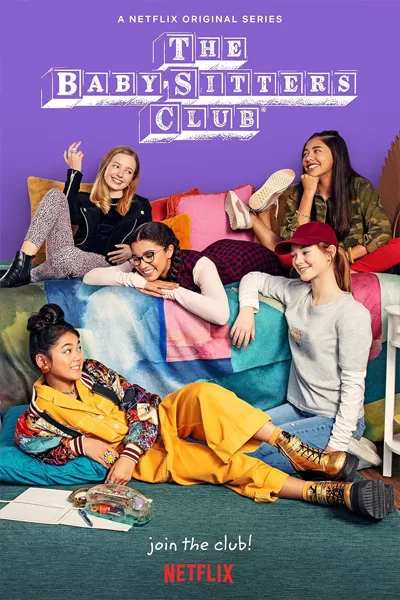
- Starring
- Sophie Grace, Momona Tamada, Shay Rudolph
- Creator
- Rachel Shukert
- Rating
- G
- Genre
- Adventure, Comedy, Children
- Release date
- July 3, 2020
- Where to watch
- Netflix
Overall Score
Rating Overview
Rating Summary
Netflix’s 2020 take on The Baby-Sitters Club pulls Ann M. Martin’s old-school novels into today’s world, centering on four middle-schoolers—Kristy Thomas (Sophie Grace), the idea woman behind the gig; Mary Anne Spier (Malia Baker), her organized sidekick; Claudia Kishi (Momona Tamada), the creative type; and Stacey McGill (Shay Rudolph), fresh from New York with her own health curveball—who team up to run a babysitting outfit in Stoneybrook. Later on, Dawn Schafer (Kyndra Sanchez) jumps in as the eco-minded addition to the crew. The setup hits with episodes tackling family splits, hidden crushes, and kid-wrangling mishaps, all while weaving in updates like Bailey, a trans girl under Mary Anne’s watch, and a more mixed-up cast that skips the original’s all-white lineup for biracial Mary Anne and Latina Dawn.
The Baby-Sitters Club Review
Netflix and original author/producer Ann M. Martin have collaborated to destroy the classic coming-of-age series The Baby Sitters Club, morphing it into modern Leftist cult indoctrination. Avoid at all costs.
The Baby-Sitters Club PARENTAL NOTES
Bend Over Parents
- See Woke Report below
WOKE REPORT
Unbridled Indoctrination
- Season 1, Episode 4 introduces a mentally and emotionally abused child actor (whose parents have brainwashed into believing that he is a little girl) playing a mentally and emotionally abused child (whose parents have brainwashed into believing that he is a little girl). Much of the rest of the episode is spent delivering various thinly veiled transexual indoctrination lessons directed at the impressionable tween girl audience.
- In one scene, a teenage girl explains that being transgender is like being right-handed while those around you try to force you to be left-handed.
- In another scene, the main character, whose arc until now has been that she is a wallflower who is nearly clinically introverted, “stands up” for the abused boy. While at the hospital, she delivers a scathing rebuke to both a doctor and a nurse who benignly refer to the boy as “he” and “him,” and dare to give him a blue hospital gown.
- The gown color triggers him, and she moves into action.
- She tells the two that they are “making her feel insignificant and unsafe.
- Her radical progressivism is then reinforced as a positive when her father reveals himself to be deeply moved by her advocacy. Later, her friends hail her as a hero.
Just Talkin’ Bout Shaft
- The main character’s new friend is introduced with a small speech about how positive it is that her parents are now divorced because her father is gay, and now able to live his best life. She’s completely ok with this.
Actual Witchcraft
- The main character’s new best friend invites her to a gathering that just so happens to be a pagan ceremony run and attended by self-proclaimed witches. The tone of the show is that they are legitimate and morally sound.
- The use of Taro cards is mentioned.
- The leader unironically calls the women in attendance “goddesses.”
DEI
- The club’s diversity is, unsurprisingly, over the top.

James Carrick
James Carrick is a passionate film enthusiast with a degree in theater and philosophy. James approaches dramatic criticism from a philosophic foundation grounded in aesthetics and ethics, offering insight and analysis that reveals layers of cinematic narrative with a touch of irreverence and a dash of snark.


No comments yet.
No audience reviews yet. Be the first to leave one.