
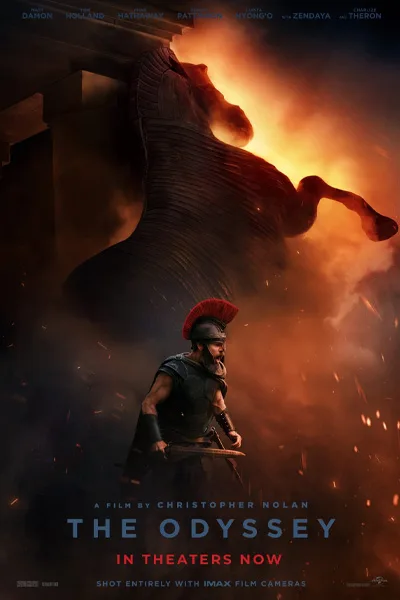
- Starring
- Matt Damon, Tom Holland, Anne Hathaway
- Director
- Christopher Nolan
- Rating
- R
- Genre
- Adventure, Drama, Fantasy
- Release date
- July 17, 2026
Rating Summary
After the fall of Troy, the cunning Greek king Odysseus sets out on an epic and perilous journey home to Ithaca. Battling mythical monsters, vengeful gods, and the merciless sea itself, he must rely on his wits and unbreakable will to return to his wife Penelope and son Telemachus. Christopher Nolan’s The Odyssey brings Homer’s legendary tale to the screen as a sweeping, large-scale adventure of survival and destiny.

The Odyssey (Christopher Nolan) REVIEW
Disjointed, Unintelligible, and Pretentious. Otherwise, it's great
Nolan Bros
Opinions on Christopher Nolan run strong. Some consider him the most brilliant filmmaker to ever live, beyond comparison or criticism. Engage with them with even a slightly less favorable opinion at your own peril.
While they number considerably fewer than the former, there is also a small contingent who think the dual-citizen, London/Chicago native, is wildly overrated and makes nothing but dry, pretentious crap.
In my opinion, Nolan is a talented filmmaker, the only big-budget director today who is still willing to take chances, and he's made some truly terrific movies. Unfortunately, he's also a director whose penchant for pretension needs a stronger safety net than his current level of success allows.
Hollywood is full of sociopathic boot-lickers with no ethical core who will tell the powerful whatever is most likely to secure their own position, and like 2023's Oppenheimer, which began to show these cracks, The Odyssey suffers terribly from no one willing to tell Nolan, "No."
Epic Ambition Epic Fail
The nearly three-thousand-year-old tale of The Odyssey is an epic adventure that spans decades, visits strange "worlds," and delves into themes both big and small. However, the 2026 movie is a disjointed miasma of stupid characters behaving stupidly, cringe millenial dialogue, the worst sound mixing in Hollywood history, and bland adventure.
Load-Bearing Structure
While the original work is also relayed mostly as a series of flashbacks, the film's adherence to that structure might be its greatest weakness, which is saying a lot. Most of the film follows this pattern: a character awkwardly or woodenly delivers a commercial load of poorly written exposition, which is impossible to hear due to poor sound mixing. A flashback of a segment of Odysseus's adventure begins. It, too, is filled with hard-to-hear, modern dialogue and exposition. One or more characters behave stupidly, resulting in Red-Shirt injury or death. Odysseus and his crew land on an island. More exposition. More stupid behavior. More red shirts die. He and what's left of his crew manage to escape thanks to his less-than-cunning cunning. Rinse and repeat.
Odysseus's downfall in the original is his hubris, but at least his arrogance was well earned. Godesses fell in love with him. He single-handedly devised the plan that ended the ten-year Trojan war, etc.
Yet, in Nolan's film, he makes one boneheaded decision after another, and his solutions usually consist of running away, crawling away, running away some more, sailing away, and having a chat before quickly walking and sailing away.
Worst of all, these sequences, some of which possess stunning practical wizardry, all feel like obstacles that Nolan was trying to get through as quickly as possible rather than the film's main thrust.
That same attitude extends to the film's mythological elements. The cyclops, the giants, the gods, and the monsters are presented less as awe-inspiring encounters than as inconveniences delaying Odysseus's trip home. Neither the characters nor the film itself ever seems particularly fascinated by them. Instead of inspiring wonder, these legendary moments arrive, are dispatched with surprisingly little emotional weight, and are quickly forgotten as the next exposition dump begins. It's almost as though Nolan was embarrassed by the fantasy elements of Homer's story and wanted to rush through them as efficiently as possible.
ADHD in IMAX
Memento followed Guy Pierce's tortured character as he struggled to rectify his present with his past. Insomnia was more of the same. Tenet... did stuff. And The Prestige slowly unraveled a delicious tale of lies, unchecked ambition, and revenge, using time to hold flaxen wool over the audience's eyes.
Even though the source material relies on non-linear storytelling, Nolan's predilection for playing with time and memory in film actually works against him here. Unlike some of his earlier successes, The Odyssey's narrative feels disjointed and jerky, with abrupt shifts to the past and present that break any hope of emotional connection.
That's ultimately why the film's sluggish pace feels so exhausting. Slow movies aren't inherently boring. Slow movies become boring when audiences fail to invest emotionally in the characters on screen. If I don't care about the characters, I'm not savoring the deliberate pacing. I'm simply counting the minutes until it's over.







Epics require grandeur in both scale and scope. The Odyssey is a sweeping tale that perfectly embodies epic narrative, that is, the original. It has political intrigue, mythical creatures, battles, men battling roiling seas, and gods and goddesses using men as game pieces. Yet, despite all that, Nolan's story, chopped into a dozen vignettes, feels as though it takes 20 years of your life before the final credits rescue you from terminal boredom.
Visuals
Nolan's aversion to CGI is well known, and in that sense, this film's use of practical effects yields the only three or four moments worth paying attention to. The sets are incredible, with a full-sized wooden pentekonter as the centerpiece for Odysseus's journey and Odysseus's palace as the focal point of much of the "present-day" happenings. Both are beyond incredible, with subtle details that make each seem ripped from the pages of history.
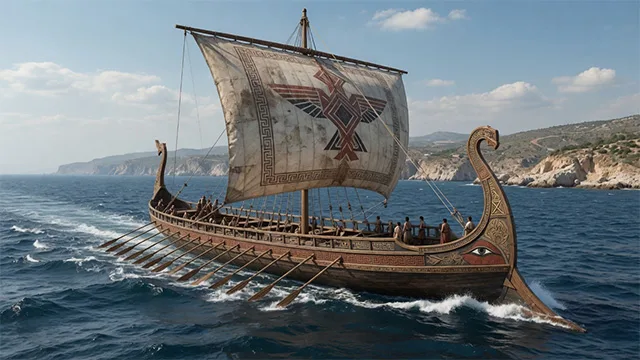
However, Nolan's use of practical effects doesn't end, or even peak, with the sets. In what is arguably the film's most engaging sequence, Odysseus and his crew face off against a 60-foot cyclops... that's actually there... filmed in an actual cave. Nolan's team actually built a 60-foot animatronic "puppet" for the actors to play against and shot the sequence in a real cave in Greece. It provides a tactile reality that a man covered in tennis balls and wearing stilts simply cannot rival.
That's not to say that every visual trick is a marvel. There's a scene, one from the trailer and poster, in which Odysseus and his crew stumble upon an isle of giants (in crappy looking medievel platemail armor—but I digress). Once again, Nolan chooses to employ a mix of practical effects and camera trickery rather than digital effects to bring the giants to life. However, for every moment of the shaky-cam, multi-cut fight sequence that brilliantly makes these men appear to tower over Matt Damon and crew, there's a cut in which five of them appear normal size, and the scene itself is so full of quick cuts that the effect, big to small to big to small, is quite jarring.
Cosplay
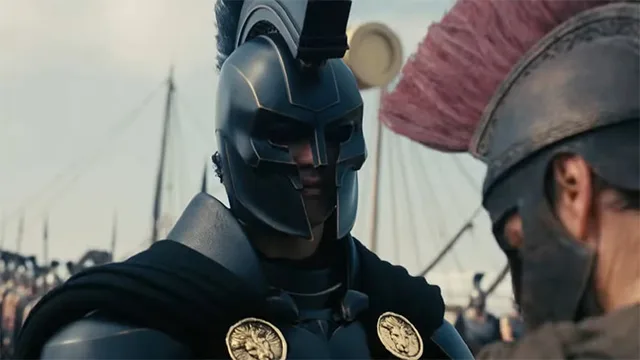
Then there's there are the costumes. As rich and detailed as the sets are, the Odyssey's costumes are mostly trash. Forget about the historical inaccuracies; they only trouble nerds like me. I'm talking production quality. Whether it's Agememnon's plastic-looking armor monstrosity or Menelaus's Under Armor hoodie, there's an inauthenticity to every scrap of armor and clothing worn on screen. Sometimes it's the material, and sometimes it's the construction, and a lot of the time it's the manufactured production quality that looks like it came out of a LARPer's closet. It's all just off.
IMIN
Christopher Nolan's Odyssey is the first feature-length film shot entirely in IMAX, something that has had the internet abuzz for weeks and has led the 25 theaters carrying it to celebrate as the film continues to break ticket sales records for the format. I saw it in XD rather than the full 70mm because I wasn't willing to drive 200 miles for a movie that looked questionable from the onset. However, there's only about a 13% difference in size between the two, so I feel confident saying that, where IMAX is amazing for wide-sweeping shots and epic battles, it is surprisingly bad at intimacy and immersion, with tight visuals that require focus, giving those moments a steroidal soap-opera effect that washes out any gains from the grander scaled scenes.
Come at me, Bros
Learning nothing in the intervening 20 years from the complaints registered by many about Batman Begins' hard-to-follow, shaky-cam fight scenes, The Odyssey's battles, both big and small, are frenetic and frantic, registering as little more than noise and visual pollution. Fight scenes are still part of the storytelling process, and giving the audience visual bedlam in every moment of every physical confrontation is a surefire way to elicit an emotional response: boredom. This is especially true for a film based on a 3,000-year-old text, of which everyone already knows the outcome, and it's even more so for one in which so little is done to bond the audience to its secondary characters.
Should you buy a ticket, you will regularly be told why you should care, but rarely shown why. Crew members appear and disappear with so little characterization that their deaths register as little more than changes in the ship's headcount. One sailor exists largely to question Odysseus's decisions, but because the audience is never given a reason to know him, like him, or value his perspective, the conflict carries almost no dramatic weight.
Sound Off... All the Way Off
In more than one interview, Nolan has downplayed the importance of dialogue in films. He believes that, as a visual medium, the audience should be able to osmotically absorb the gist of the goings-on from contextual clues, body language, tone, etc., and, to a certain extent, he's right. After all, silent films can still be incredibly impactful event today, and if you read through my reviews of modern cinematic offerings, there's more than one in which I complain about this or that filmmaker's overreliance on expository dialogue in what is essentially a show, don't tell medium.
However, that only works when characters don't spend 90% of their screen time stiffly delivering exposition, much of which is buried beneath intentionally muddy sound mixing.
The human brain doesn't simply hear speech; it actively predicts it. When dialogue suddenly disappears beneath overwhelming noise or drops to an inaudible whisper, those predictions collapse, yanking audiences out of the experience as they struggle to reconstruct what they missed. Instead of becoming immersed in the story, they're forced into the role of audio detective, trying to piece together dialogue they assume must matter simply because the filmmakers chose to include it. If Nolan wants to make a silent movie, he should do so, because this hybridization simply doesn't work, nor does the film's soundtrack.
Worse still, the dialogue isn't worth the effort. Nearly every conversation consists of stiff, awkward exposition explaining events, motivations, or mythology that should have been conveyed visually. The audience spends so much energy trying to hear what the characters are saying, only to discover that they're mostly explaining things everyone already knows. It's a remarkable achievement to make exposition both impossible to hear and tedious once you finally do.
In yet another of the film's thematic inconsistencies, Christopher Nolan chose not to have a traditional symphonic score but instead opted for a persistent, omnipresent drum, since there were no symphonies in 800 B.C. Well, there weren't transgender midgets fighting wars or Sub-Saharan African Greek princesses either, Chris. The resulting bombastic thrum rarely quickens the heartbeat and almost never helps establish an emotional connection within a moment. Rather, it perfectly reflects the toneless dynamics that permeate virtually every scene.
Every weakness compounds every other weakness. Flat dialogue produces flat performances. Flat performances prevent emotional investment. Without emotional investment, the deliberately slow pacing becomes tedious. By the time another action scene or mythological encounter arrives, the audience isn't anticipating it; they're simply waiting for the film to finally move on.
But What a Cast
What passes for A-list talent flocks to Christopher Nolan like the salmon to Capistrano, and The Odyssey is no exception, except for John Leguizamo. However, being A-list doesn't mean you are right for a particular role, and, aside from DEI stunt casting, this film has some of the most horrifically bad miscasting in recent memory.
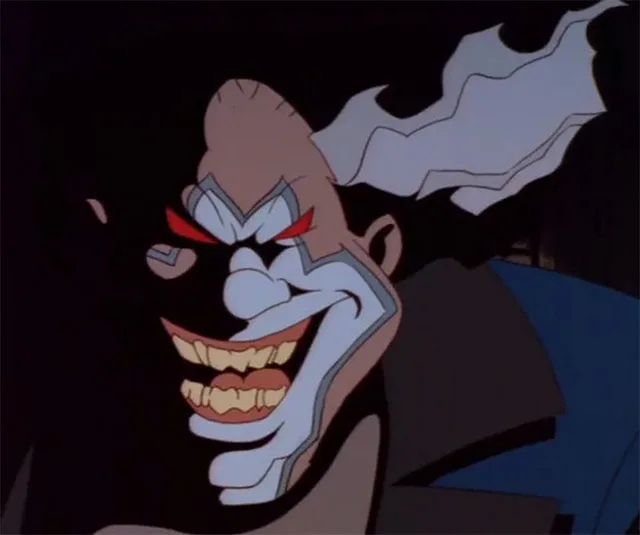
John Leguizamo, whose best performance to date is that of the voice of The Violator in the short-lived 90s Spawn cartoon on HBO, plays Odysseus's friend and mentor Eumaeus, and does so with kiddie pool depth.
However, period pieces should issue a restraining order against Jon Bernthal. Best known for playing The Punisher on the short-lived series of the same name, Bernthal bounces his shoulders and jerks his head like a meth tweaker who ran out of Suboxone strips a day ago, playing the same twitchy tough guy he does in almost everything.
Then there's the wildly overrated Anne Hathaway. Her over-animated face, exaggerated features, and pompous voice perfectly punctuate her insincerity in every frame of the film. There's something incredibly artificial about her, like she's a robot that's never actually experienced emotions but has had traditional expressions incorporated into its programming. She can access the features at unnatural speeds (*tears activated*) while never actually conveying the associated emotion. There was a moment in this film when she activated her quivering lip that earned me dirty looks from my neighbors as I laughed out loud at how silly she looked.
Having said all that, Matt Damon probably gives the strongest performance in the film, but the material surrounding him is so weak that it scarcely matters. Being the best performance in one of the year's weakest ensemble efforts isn't much of an accomplishment. The rest of the cast ranges from forgettable to actively miscast, and even Damon's work never rises above competent because he's saddled with dialogue that rarely sounds like anything a real human being would ever say.
Bring it Home
Christopher Nolan's The Odyssey is a film of contradictions.
It boasts some of the finest practical sets ever constructed for a historical epic while dressing its heroes in armor from the wrong centuries and the wrong civilizations. It insists on period authenticity by replacing a traditional orchestral score with primitive percussion, yet simultaneously populates ancient Greece with actors who bear virtually no resemblance to the people who actually lived there. It simplifies Homer's dialogue into modern, often painfully blunt speech while presenting itself with the pomp and self-importance of high art.
The same contradictions extend to the performances. This is one of the most impressive casts assembled in years, yet it also contains some of the weakest performances many of these actors have ever delivered. Matt Damon emerges as the clear standout, but that's rather like being voted the tallest Munchkin. The material is so lifeless that even the film's strongest performance struggles to leave an impression.
Christopher Nolan remains one of the few filmmakers in Hollywood willing to swing for the fences, and for that alone, he deserves credit. When those swings connect, the results can be extraordinary. But this time, ambition became indulgence, confidence became arrogance, and artistic conviction crossed over into artistic stubbornness.
The Odyssey isn't a disaster because Nolan lacked vision. It's a disappointment because he had too much confidence in it to recognize when it wasn't working. The film is filled with brilliance, craftsmanship, and technical achievement, but those qualities never coalesce into a satisfying whole.
Nearly every flaw in The Odyssey feeds another. The exposition-heavy dialogue flattens the performances. The flat performances prevent emotional investment. Without emotional investment, the slow pacing becomes interminable. And because the audience never grows attached to the characters, the deaths, betrayals, reunions, and mythological encounters that should define Homer's epic all pass with surprising indifference. A three-thousand-year-old story built on one man's desperate journey home somehow makes home feel like the least important destination imaginable.
For a story that has endured nearly three thousand years because of its timeless humanity, that's the greatest irony of all. Christopher Nolan's The Odyssey is an epic in scale, monumental in ambition, and astonishing in craftsmanship. It simply forgot to be an engaging story.

WOKE REPORT


You're Only Getting Half the Picture.
This section is our site's secret sauce, and what truly separates us from the rest. If you don't read it, you haven't read our review.
Help us fight the Woke Mind Virus. Join today.

James Carrick
James Carrick is a passionate film enthusiast with a degree in theater and philosophy. James approaches dramatic criticism from a philosophic foundation grounded in aesthetics and ethics, offering insight and analysis that reveals layers of cinematic narrative with a touch of irreverence and a dash of snark.

Great review. I have not seen, but i know you are spot on. When Nolan minimized the threat of the Communist spies who worked on the Manhattan Project in Oppenheimer I knew something was terribly wrong. I will watch at home for free and fast forward through all of Ellen Page, black Helen, John Leguizamo, the rapper and the rest of the DEI crap. I will waste 30 minutes on the rest of the movie.
As usual, thank you for saving me money. When I heard that this was Nolan’s next film, I was excited. When I saw the cast, I decided to pass. Nolan is (was?) my favorite working director, but this? Not even Matt Damon will make me leave my house for this woke trash.
I, too, was excited when I heard about this film for the first time. After Inception, Interstellar, Memento, and The Prestige, Nolan quickly became my favorite director and I am an AVID history nerd, so I couldn’t contain my joy when I heard The Odyssey was being done to his cinematic scale. Then I saw Ellen Page in her little cosplay and read who was playing Helen of Troy and I was out. Nolan must have used a little CGI to cover up what would have been a massive scar from tissue removal on her forearm because that’s what they use to make… well, you know. The whole thing is absurd. I’ll stick to the original texts. At least Assassin’s Creed: Odyssey gave you the choice to play as a male. I do want to note, however, that I read that the Academy FORCES directors to include one gender swapper and a certain number of different races or else they cannot be considered for Best Picture. That is going to ruin movies for a long time to come. I miss the days when drag races involved cars and “tranny” was short for transmission.
No audience reviews yet. Be the first to leave one.