- Starring
- Aimee Carrero, Marcus Scribner, Karen Fukuhara
- Creator
- Nate Stevenson
- Rating
- TV-Y7-FV
- Genre
- Action, Adventure, Fantasy, Sci-Fi
- Release date
- Nov 13, 1028
- Where to watch
- Netflix
Overall Score
Rating Overview
Story/Plot/Script
Visuals/Cinematography
Performance
Direction
Age Appropriate
Parent Appeal
Non-Wokeness
Rating Summary
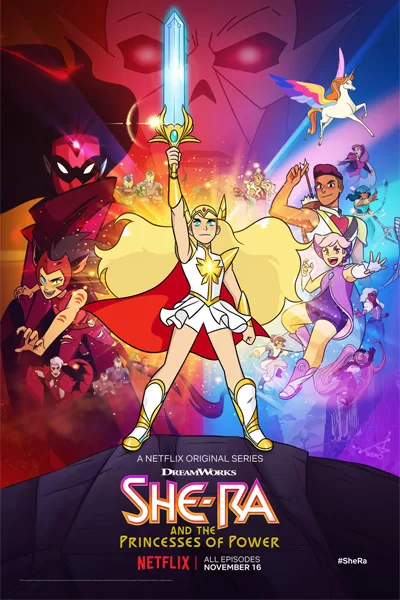
She-Ra and the Princesses of Power follows Adora, a young woman who discovers she can transform into the powerful She-Ra, defender of Etheria. Adora joins a rebellion against the evil Horde, led by Hordak, teaming up with a group of magical princesses to protect their planet.
She-Ra and the Princesses of Power Mini-Review (S4: E2)
Childish in all the wrong ways, this episode fills in its bare sketch of a story with today’s favorite meat-filler, feelings and friendship. She-Ra and the Princesses of Power is another empty shell of a modern remake that trades storytelling for a cotton candy-covered agenda.

PARENTAL NOTES
TV-Y7-FV
- This rating is supposed to mean that the program’s content is safe for children as young as seven years old. Though it does contain “fantasy violence” and might therefore be too much for the especially sensitive.
- That said, although the program is cloying and vapid, except for the elements in the following Woke Report, the content is loud but otherwise benign. Even the violence is more implied than anything else.
WARNING
- My ratings are only for this episode, but from what I’ve seen in my research, there are some events and character relationships in this program that are wildly inappropriate for 7-year-old viewers.
WOKE REPORT
This Episode
- The diversity is at silly levels. The original characters were all white and straight.
- Bow has been changed from the tall, strapping white man he was in the original to a weak-looking black man, making him one of the smallest in the core group.
- A body positive (aka dumpy) princess is one of the core characters.
- It features a massive and masculine purple chick (Huntara) voiced by Geena Davis.
- It introduces a shape-changing character that, unlike the crazies in the real world, is actually non-binary because it can be either gender at will and has no true single form. It is referred to as they/them in this episode, and from what I can tell, the rest of the series. It is also voiced by a mentally ill man who believes that he is a gender that doesn’t exist in the real world.
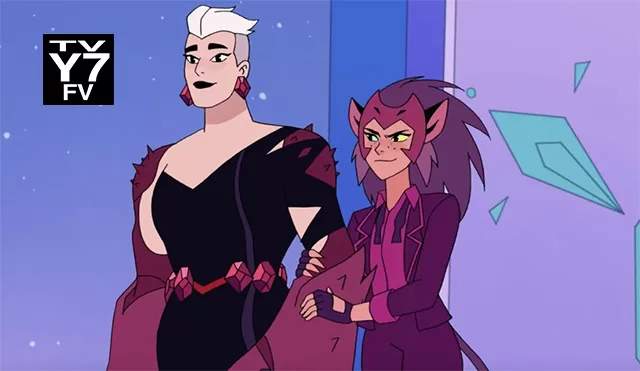
- A large butch lesbian with scorpion claws makes a pass at another woman.
- The silly phrase, “I always try to speak my truth,” is said unironically.
The Rest of the Series
- I only watched this one episode, but I did some significant research and found some seriously troubling things about the rest of the series.
-
- Queer Eye for the Small Fry
- It is gayer than RuPaul riding a rainbow unicorn through a spincter-shaped glitter factory.
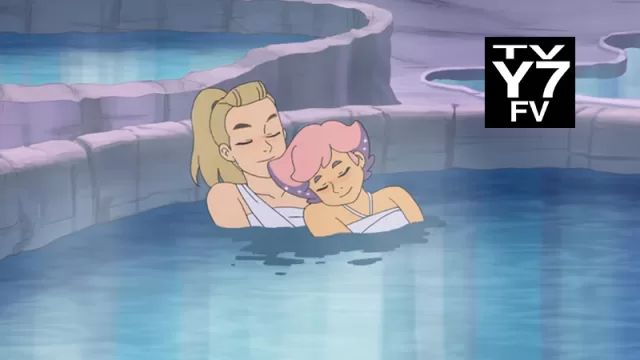
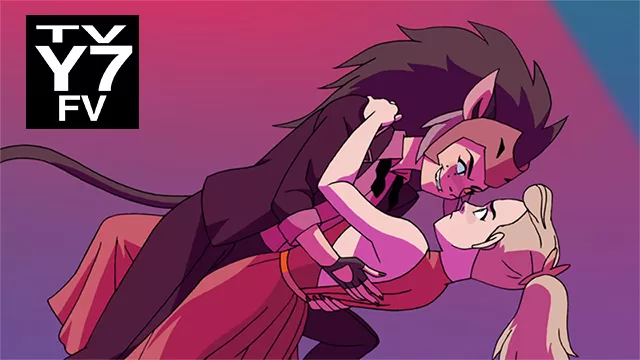
- Adora (aka She-Ra) is gay.
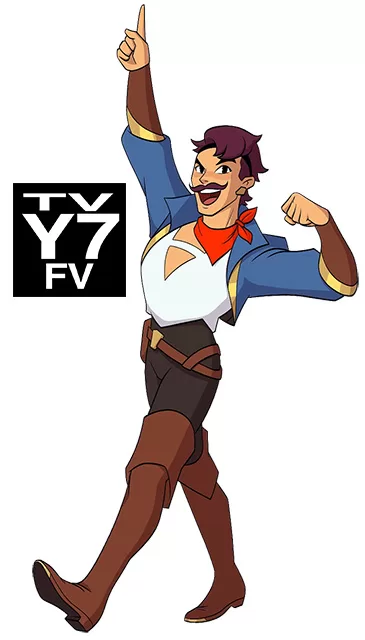
- Seahawk is bisexual.
- Swift Wind (She-Ra’s unicorn) is colored in the bi and pan color palette.
- Jewelstar is a mentally ill woman who thinks she’s a man. This is according to the designer and apparently not explicitly stated in the program.
- Like Jewelstar, Perfuma is a mentally ill man who thinks he’s a woman, also confirmed by the designer, but not explicitly stated in the program.
- The list legitimately only runs out when the characters do.


- It is gayer than RuPaul riding a rainbow unicorn through a spincter-shaped glitter factory.
- Queer Eye for the Small Fry