

- Starring
- Stars Gordon Cormier, Kiawentiio, Ian Ousley
- Creator
- Albert Kim
- Rating
- TV-PG
- Genre
- Action, Adventure, Comedy
- Where to watch
- Netflix
- Release date
- Feb 22, 2024
Overall Score
Rating Overview
Rating Summary
In recent years, Hollywood has increasingly turned its attention to beloved anime series, attempting to bring these vibrant worlds and characters to life on the big screen. Netflix’s One Piece managed to capture the spirit of the original while introducing fresh elements, resonating with audiences and proving that a faithful remake could indeed succeed. Meanwhile, the Netflix-produced “Avatar: The Last Airbender” has generated immense anticipation. Fans have eagerly awaited the adaptation, hoping it too will honor the source material and deliver an unforgettable experience. This is especially so after so many fans were burned by the 2010 adaptation of “The Last Airbender,” directed by M. Night Shyamalan, which fell short of expectations.
DISCLAIMER: I have never seen a minute of either the cartoon or the 2009 live-action film. This review is solely about this property, with no comparisons or contrasts drawn.
Avatar: The Last Airbender
After being frozen in ice for 100 years, Aang finds that the world to which he has returned is far different from the one he left. Now, hunted by those who destroyed his people and subjugated much of the land, he must travel to distant nations if he hopes to master all of the elements and reach his full potential as the Avatar and prophesied savior of humanity.
PARENTAL NOTES
Shucks
- Netflix’s “Avatar: The Last Airbender” carries a TV-PG rating, a fitting classification given its blend of high-stakes scenarios and intense sequences. While striving to appeal to both younger and older audiences, it predominantly leans towards a younger demographic. This inclination results in significant violence being portrayed offscreen, yet it also incongruently incorporates an unnecessary number of curse words into its episodes, detracting from its overall tone and appropriateness.
- There are several “d@mns” and “@$$es” throughout.
WOKE REPORT
Girl Power
- In every episode, the main trio visits a new location, and each location has its very own briefly featured girl boss, with the exception of the final episode.
- In the final episode ***SPOILER ALERT***, Katara, who’s spent the entire season struggling to learn waterbending from a pamphlet, suddenly becomes a master whose abilities eclipse the masters whom she’s been seeking this entire time… because she now believes in herself. ***END SPOILER***
- She’s such a Mary Sue that her abilities are at least on par with Aang’s Airbending, which makes sense since he’s – you know – the freaking physical manifestation of elemental power on the planet. She can now fairly easily defeat warriors who have trained with other skilled opponents nearly every day of their lives.
- The Fire Nation’s princess Azula spends her limited screen time being dumpy and grumpy as she tries to demonstrate to her father that she’s not just as good as any man but better.
- This is by far the worst casting in the series (don’t yell at me if you’re a fan of the cartoons and they screwed someone up. As I said, I haven’t seen it, and this review is only within the context of this series). Elizabeth Hu exudes no presence and gives one of the season’s worst performances. Since she gets very little screen time, this wouldn’t be such a big deal except that she has been set up to be the big bad of season 2.
- In the final episode ***SPOILER ALERT***, Katara, who’s spent the entire season struggling to learn waterbending from a pamphlet, suddenly becomes a master whose abilities eclipse the masters whom she’s been seeking this entire time… because she now believes in herself. ***END SPOILER***
Ain’t No Man Gonna Tell Me Nothin’
- The girl boss stuff is fairly limited in most of the episodes, and there’s really no cartoonish out-of-place misogyny to give the ladies an excuse to get huffy… right up until the final episode in which it’s so clumsily and artificially forced into the story that it completely ruins whole chunks of the finale.

James Carrick
James Carrick is a passionate film enthusiast with a degree in theater and philosophy. James approaches dramatic criticism from a philosophic foundation grounded in aesthetics and ethics, offering insight and analysis that reveals layers of cinematic narrative with a touch of irreverence and a dash of snark.
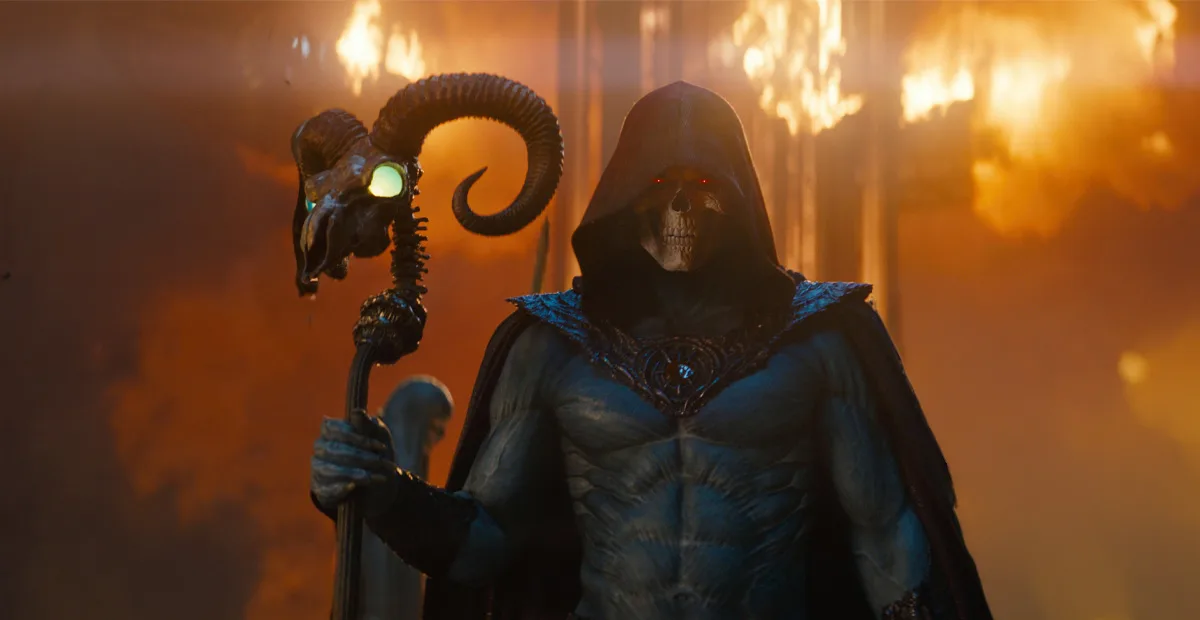
I didn’t watch the Netflix series but the original Avatar: The Last Airbender was one of the defining shows of a generation.
For those of you who aren’t already familiar with the original series, Katara was the last waterbender in the South Pole because the Fire Nation had spent the last 100 years raiding the South Pole, kidnapping and imprisoning all their waterbenders. Because there’s no one around to teach Katara how to use her powers, she joins Aang to go to the North Pole with the intent of finding a master who can teach her and Aang. However, the Northern Water Tribe has a tradition that female waterbenders are not allowed to be taught to use waterbending for combat, only for healing (never mind that the practical ability to manipulate water is a critical part of the Water Tribe city infrastructure). The sexist Master Pakku eventually relents when he discovers Katara is the granddaughter of the woman he was betrothed to marry, but Gran-Gran moved to the South Pole because she didn’t want to marry him and didn’t want tradition to control her life (and there is no tradition preventing females to learn waterbending for combat in the South Pole). Katara does master waterbending fairly quickly, but she clearly attributes her success to having a competent teacher who helped her get better and because she was persistent and diligent rather than coasting on in-born talent the way Aang does.
Azula doesn’t show up properly until the second season, but in the original series she was so naturally gifted, overconfident and driven to perfection that she didn’t have to prove anything to anyone.
The original series did have a lot of powerful female characters in it, but their victories were never unearned and the show quickly dropped the sexism angle after the first season once Sokka learned that being a girl wasn’t the same thing as being a domestic servant with no sense of agency.
No audience reviews yet. Be the first to leave one.