
- Rating
- TV-PG
- Where to watch
- Netflix
- Release date
- Jan. 13, 2017
Overall Score
Rating Overview
Rating Summary
Author Daniel Handler created A Series of Unfortunate Events under the pseudonym Lemony Snicket. The inspiration for the series came from Handler’s own experiences with feeling out of place as a child and his love for Gothic literature. Handler wanted to write a story that explored themes of loss, resilience, and the unpredictability of life, resulting in the darkly humorous and uniquely stylized world of the Baudelaire orphans and their encounters with the nefarious Count Olaf. The series, consisting of thirteen novels, garnered widespread acclaim for its clever storytelling, memorable characters, and satirical take on traditional children’s literature tropes.
A Series of Unfortunate Events (season 1)
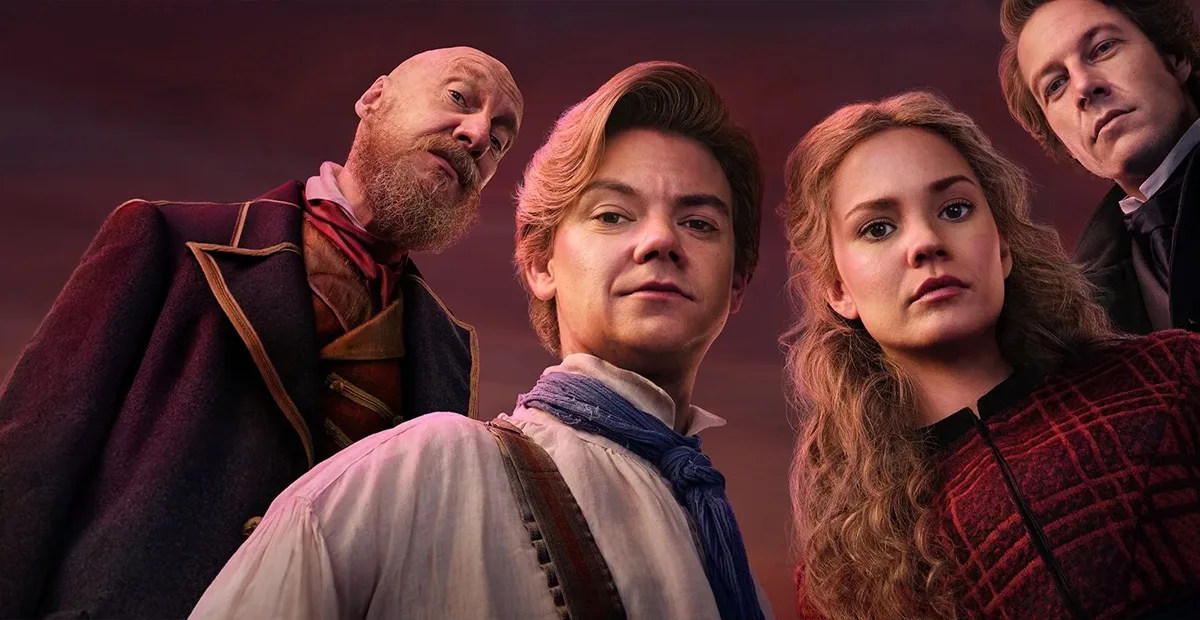
The Baudelaire children have just lost their parents to a horrible fire, and things only get worse from there. No sooner do they learn of this unspeakable tragedy than they find themselves dealing with a series of unfortunate events (get it). Count Olaf, a criminal miscreant who not so mistakenly gets custody of the wealthy orphans. With his ultimate goal being to steal their storied inheritance away from them, Olaf is willing to do anything, hurt anyone, to get what he wants.
PARENTAL NOTES
A Series of Unfortunate Events is rated TV-PG for some intense scenes and suggestive material, and it stays within those bounds but only just barely. If you’re looking for something completely safe with a healthy dose of PG-appropriate intensity, check out The Wingfeather Saga.
While there’s very little actual violence seen on screen, the constant and sometimes graphically expressed threat of violence and harm toward the Baudelaire children is ever-present. When Patrick Warburton, as Lemony Snicket, warns the audience that this is a sad tale best not watched by those who wish to be happy, he’s not far off. It is an almost always dark and depressing tale.
Language
- Oh my God is said more than once (I counted twice but could have missed a few)
Count Olaf is Evil
- He is physically and psychologically abusive to the children.
- He once violently backhands the young Baudelaire boy.
- Â He regularly threatens the trio with actual violence.
- Throughout an entire episode, he threatens to murder the baby
- He ties her up and places her in a birdcage suspended high in the air and places one of his henchmen nearby with instructions to cut it loose and let it crash to the ground if things don’t go as planned.
- In one episode, while brandishing a large knife, he tells one of the children, “If I wanted to harm you, orphan, your blood would be streaming out of this car like a waterfall.”
- Throughout an entire episode, he threatens to murder the baby
- He murders several people
- We see the rotting corpse of one of them in one of the episodes.
It’s Ok Because It’s Suggestive, Not Explicit
- Olaf says, “I don’t think a boy of your age should be using the word “titular.”
- Olaf says, “I’ll touch whatever I want.” He then suggestively rubs a young girl’s shoulder like he’s Joe Biden.
- This is as he is scheming to force the young teenage girl (14) Baudelaire to legally marry him.
- At this time, he greasily lets her know that he’ll not toss her out of the house like he will her sister and brother after they are wed.
- This is as he is scheming to force the young teenage girl (14) Baudelaire to legally marry him.
- Olaf says, “I don’t care if you have an audition for Equus.” Most people won’t get the reference, but Equus is a famous play in which a young boy (usually portrayed by a young actor who looks even younger) is sexually attracted to a horse. In one scene, the young boy strips naked (usually for real in stage productions) and has simulated sex with a prop horse.
- There are thousands of plays that they could have referenced. Why that one? It’s not in the books.
- While on a ship, one of the evil adult twin sisters says “Land ho” to which the other sister replies “I told you to stop calling me that.”
- Count Olaf’s girlfriend says, “What about children?” To which he replies, “Shouldn’t we live together first?” She was referencing the Baudelaires, not soliciting him.
- Count Olaf’s girlfriend references La Petit Mort, which is how the French refers to an orgasm had during sex.
- I don’t recall who says it, but one character says, “Oh, sexy.”
WOKE REPORT
Let’s Talk About Sex… In A Children’s Program
- All of the aforementioned sexual innuendos in A Series of Unfortunate Events. STOP SEXUALIZING OUR KIDS!
Gotta Question ‘Dem Norms
- There is a character who is increasingly trans throughout the season, expressed through his increasingly feminine clothing and hair, as well as a number of things that he says.
- In one scene, while wearing women’s clothing, he says, “We don’t care what our name is.. or what your gender is.” It’s completely out of left field.
- In one scene, he says, “I just think, even in changing context, that marriage is largely a patriarchal construction that is likely to further the hegemonic juggernaut that’s problematizing, uh…”
- He’s portrayed as a moron, but the joke isn’t that what he said was moronic, but that he managed to say something so intelligent.
- A character says, “Get in your pajamas and say your prayers… unless you’re an atheist”
- Count Olaf says, “Plenty of boys enjoy playing with dolls.” This is said seriously.
- My understanding is that this line also appears in one of the A Series of Unfortunate Events books. So? Then it was woke in the book, too.
- When referencing a particular species of snake, more than one character says, “…most venomous snakes known to man… and woman.” Cause… you know… equality and stuff.
- The two men who run the Sawmill are a gay couple. Their relationship in the book is never more than that of friends and business partners. Still, in the series, Lemony Snickets tells us that due to “current cultural norms and recent court cases,” the term “partners” has gone on to mean other things, and he clearly means that they are gay.
- Later, the one leans in for an unanswered kiss from the other.
James Carrick
James Carrick is a passionate film enthusiast with a degree in theater and philosophy. James approaches dramatic criticism from a philosophic foundation grounded in aesthetics and ethics, offering insight and analysis that reveals layers of cinematic narrative with a touch of irreverence and a dash of snark.


No comments yet.
No audience reviews yet. Be the first to leave one.