
- Starring
- Kevin Spacey, Dave Foley, Julia Louis-Dreyfus
- Directors
- John Lasseter, Andrew Stanton
- Rating
- G
- Genre
- Adventure, Animation, Family
- Release date
- Nov 25, 1998
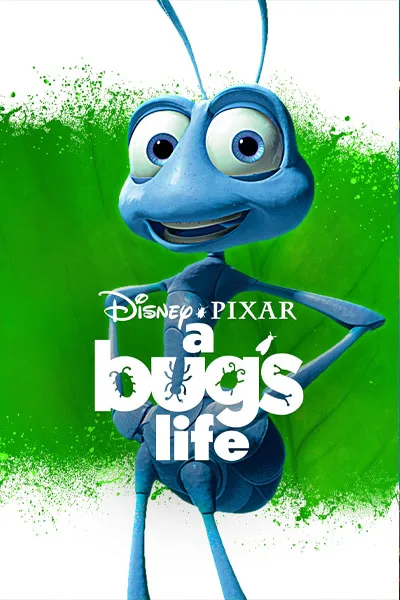
A clumsy but well-meaning ant named Flik recruits a ragtag group of circus bugs to defend his colony from a gang of greedy grasshoppers who demand tribute every season. A Bug’s Life is an adventurous tale of courage, teamwork, and standing up to bullies in the miniature world of insects.
X Marks the Spot - Follow us Today!!
Follow @worthitorwoke

James Carrick
James Carrick is a passionate film enthusiast with a degree in theater and philosophy. James approaches dramatic criticism from a philosophic foundation grounded in aesthetics and ethics, offering insight and analysis that reveals layers of cinematic narrative with a touch of irreverence and a dash of snark.

No comments yet.
A Bug’s Life is Pixar’s second film. It’s not as well remembered as others because it’s been overshadowed by Pixar’s later films, but it is solid and has no major flaws.
The story is a variant of the parable of the Ant and the Grasshopper. The ants spend all summer gathering food for winter, but grasshoppers don’t. The grasshoppers, being bigger and meaner than ants, bully the ants into collecting food for an offering to give to the grasshoppers. The ants don’t know how to fight back, so a clumsy inventor ant, Flik, recruits a group of circus bugs he thinks are warriors and develops a plan by building a giant fake predatory bird to frighten the grasshoppers away. In the process, the circus bugs find a greater sense of purpose and the ants learn to stand up for themselves by virtue of superior numbers.
Movies about talking animals often fudge biology a bit in order to make the characters seem more human. In real life, all worker ants are female and male drones only exist to reproduce. Also, ants are holometabolus, meaning they begin their lives as larvae and pupate into adults, so there are no ant children, especially not like Dot. Of course, in a biologically accurate movie, the moment Hopper would land on Ant Island, the ants would immediately swarm him, disassemble him while he was still alive and eat him for dinner. It’s a bug-eat-bug world, and the world of insects is as fascinating as it is violent. A Bug’s Life isn’t terribly violent, but the little ant boys speculate that Flik is going to die out in the wild, the ant children put on a play where warriors and grasshoppers fight and everyone dies, and the children also draw a mural with lots of blood that shows the caterpillar dying because it would look more dramatic that way. The flies say they have only 24 hours to live, and the black widow spider mentions the death of her twelfth husband. Some of the flies are depicted eating a “poo-poo platter” and mosquitoes are seen drinking droplets of blood served by a bartender. Yes, bugs eat things like that.
One of the main themes of the movie is about innovation and trying out new ideas. In a more modern film, change, innovation and newness for its own sake is considered superior and inevitable and those who don’t get on board will get left behind, and failure could happen but gets glossed over. A Bug’s Life shows that innovation comes with risk; when Flik’s inventions work, they can make life easier, but when they malfunction Flik doesn’t simply fail or damage his reputation, he could lose his livelihood, or his life. Atta, as a queen-in-training is also afraid of failing and knows that she is taking a big risk by trusting Flik and the circus bugs and building the bird. Knowing that failure is a real possibility that can come with steep costs creates a sense of dramatic tension and real stakes.
There is an element in this movie regarding Francis, the ladybug. Francis is actually a male ladybug, and gets very angry at boorish flies who assume he would be female because he’s a ladybug. They still continue to harass him like a woman even though they know he’s a man just as a joke. Later, when Francis breaks his leg and has to stay off it, the ant girl scouts adopt him as a “den mother” even though they know he’s a dude, and he warms up to the girls. This wasn’t woke in 1998 when the movie was made. It wasn’t intended as emasculation or transgendering or any modern gender war nonsense; it’s really more of a broken logic gag that creates humor by toying with audience expectations. The very angry ladybug Francis is a tough bug made to look cute, and his influence makes the cute little girls become more tough.
One last thing: an ant exclaims “Jiminy H. Cricket!” and he might not be thinking of the character from Pinocchio.