
- Starring
- Ellen DeGeneres, Albert Brooks, Ed O'Neill
- Directors
- Angus MacLane, Andrew Stanton
- Rating
- PG
- Genre
- Adventure, Animation, Comedy, Family
- Release date
- June 17, 2016
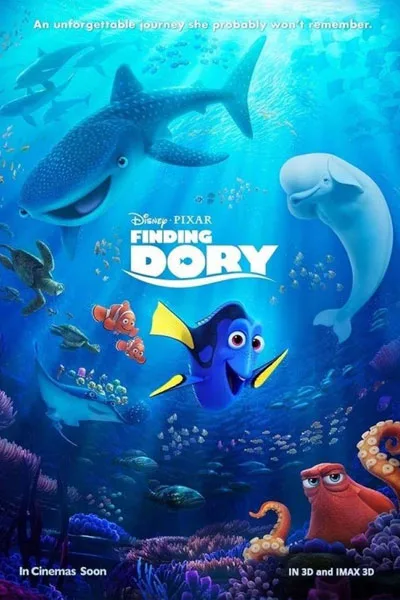
Dory, the forgetful blue tang, suddenly remembers she has a family and sets out across the ocean with Nemo and Marlin to find them. Finding Dory follows her heartfelt and hilarious journey of memory, family, and belonging.
X Marks the Spot - Follow us Today!!
Follow @worthitorwoke

James Carrick
James Carrick is a passionate film enthusiast with a degree in theater and philosophy. James approaches dramatic criticism from a philosophic foundation grounded in aesthetics and ethics, offering insight and analysis that reveals layers of cinematic narrative with a touch of irreverence and a dash of snark.

No comments yet.
Finding Nemo was a beautiful movie about a risk-averse fish learning to face his fears to cross the wide ocean and reunite with his kidnapped son. Finding Dory was released over ten years later, picking up one year after the first left off. I wasn’t particularly excited about it when it came out. It seemed unnecessary and I chose to skip it. Most of the people who did watch it told me that it wasn’t very well-done or interesting. One thing that bothered me was that Disney’s Big Hero 6 was moved from Tokyo, Japan to “San Fransokyo”, California. Pixar’s Inside Out was about a girl moving from Minnesota to San Francisco, California. And this movie also reveals that Dory is originally from California, too. Back then I had the impression that Disney was becoming too insular, making movies either about people who lived in California or who acted as if they lived in California at the cost of telling more universal stories for people that didn’t share the southern California mindset. Around that time I pretty much gave up caring about new Disney/Pixar releases because I figured they were no longer meant for me.
We’re introduced to a young Dory with her mother and father. Dory has short-term memory loss, and although her parents love her, they want to do everything they can to keep her safe. However, Dory not only has memory loss problems, she also has issues with attention span, hyperactivity, a distinct lack of self-preservation instincts, and an obnoxious tendency to infer things that are counterproductive and generally get in the way. The movie tries to frame Dory wandering too far out and forgetting that she has a home and a family as something sad and tragic, but because Dory is annoying, the fish she meets don’t know what to do with her and don’t want anything to do with her. If I wasn’t already familiar with goodwill from the first movie, I’d probably give up on her, too. Many times when the film tries to get emotional to make me care, my instincts keep telling me that I’m being manipulated, putting me on the defensive. Marlin doesn’t want to go because he’s had enough adventure for one lifetime but is roped in anyway because Dory has made him feel too guilty to say “no” to her and he’s made to sound like a mean person when he does. Other fish who find Dory also want to help her not because they care about her but because not caring a lost child with memory problems makes them feel guilty, too. When the primary emotional driver of the story is guilt, I end up feeling awful most if not all the time, and that makes for an overall bad movie experience. I also felt that the plot was annoyingly circuitous, the action moved too quickly on the places where things should have been slowed and lingered too much on places that didn’t need to be focused on. Not only is Dory annoying but many of the characters living in the Marine Life Institute also have awkward or cringe-inducing mannerisms to make them seem more “relatable”, when what it really does is make me want to smack some sense into them.
The first movie worked because many of the obstacles Marlin faced were related to his fear; yes, he’s afraid of predators, but he had to learn to have faith, find out that some creatures were more trustworthy than they appeared, and that he was plenty capable of dealing with creatures who actually were dangerous. This time, Dory is taken in by the Marine Life Institute meant to rehabilitate sick or injured animals, and the obstacles faced mostly serve to jog Dory’s memory and conveniently give her a clue to the next plot point rather than challenge her in a meaningful way. Even the exciting and dangerous sequence sequences with perils like the blue ringed octopus or evading the human scientists feel artificially injected because most of them end up solving themselves, or Dory is credited for the success when other characters are the ones who actually got her there. Also, the fault that Marlin has to overcome is to learn to act more like Dory, making moves blindly and succeeding by being lucky rather than planning ahead and assessing risk like he normally does, because the best things in life “happen by chance”. It’s as if reality itself always finds a way to bend to accommodate her ludicrous logic, and every time Dory does something stupid and dangerous but wins anyway by being lucky, I dislike her more and more. Dumb luck is not the same thing as faith.
When I was younger, the narrative regarding people with disabilities was that a disability didn’t define a person. It meant that it was slightly more difficult for them to do something most people took for granted, but they weren’t completely helpless. They were fully capable of living normal lives with some accommodations and didn’t want to be pitied or have artificial limitations imposed on them. The original Finding Nemo did that. Later on the narrative shifted to disabled people actually being superior because they could do things able-bodied people couldn’t do, either because their disability was secretly a super power or because their disability made them more motivated toward achievement. [Somehow, this disability-super-power narrative stopped being “inspirational” some time ago and started making me feel inadequate and resentful instead; it implies to me that achieving success should be so absurdly easy that there’s no good excuse for not obtaining it, and I’m not too proud to admit it]. Today, disabilities are now part of the intersectional victimhood totem pole, so randomly having a major character who is permanently seated, blind, deaf, or autistic [allegedly] is now an inclusion requirement, treating disabilities with a degree of condescension disguised as compassion and making ordinary people feel needlessly guilty. Disabilities by themselves aren’t woke because there are real people who have them, but when they’re being used in a way that intentionally makes me feel bad about myself, manipulated into pitying others or to score social relevance points, that’s when I have to adjust the woke score much higher.
Here come the extra dings:
Dory is acting as a teaching assistant for Nemo’s class when she suddenly remembers she has a family, but forgets what she’s talking about. Nemo reminds her that she’s discussing “mommies and daddies”, and Dory awkwardly misconstrues this as a lesson in reproduction.
While riding the gnarly California current, Crush tells Marlin that if he’s going to throw up, he should go to the back of his turtle shell and shoot for distance. They call this “feeding the fishes”. Also, at the end of the movie, a small fish is eaten by a bigger fish, which is eaten by an even bigger fish, which then sneezes and pukes the two smaller fish out.
On Dory’s journey, one of the places she visits is an underwater junkyard where ships have been wrecked, metal shipping containers litter the ocean floor, and lots of garbage has piled up. Many of the animals who live there have adapted to using the garbage as a habitat, as all the hermit crabs have taken rusty human artifacts as shells. [There’s some element of truth to that, but I can’t help but think Pixar was making some kind of negative statement about pollution here. Goes back to the points I made about intentionally making the viewer feel too guilty.] Many of the underwater sequences in California generally have muddy and muted color palettes, implying that the water is darkened or dirty somehow.
Playing “dead”, Dory jokingly says she has to blink and asks the dead fish in the bucket how they keep their eyes open for so long. [Real fish don’t blink because they don’t have eyelids].