
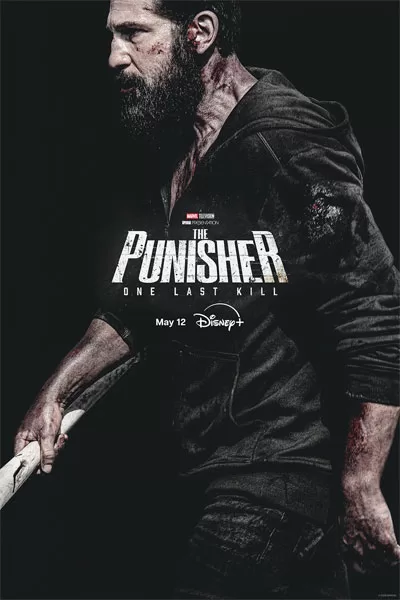
- Starring
- Jon Bernthal, Chelsea Brea, Colton Hill
- Director
- Reinaldo Marcus Green
- Rating
- TV-MA
- Genre
- Action, Crime, Drama
- Release date
- May 12, 2026
Overall Score
Rating Overview
Rating Summary
After years of unrelenting vengeance, Frank Castle tries to leave his life as the Punisher behind. But when a rising criminal empire threatens everything around him, he is pulled back into the shadows for one final, brutal reckoning. The Punisher: One Last Kill follows Jon Bernthal’s Frank Castle as he confronts old demons and delivers one more dose of brutal justice.

The Punisher: One Last Kill REVIEW
It's been seven years since the second season of Netflix's The Punisher came to a close. In that time, Jon Bernthal's fan-favorite Francis Castiglione has briefly popped up in the disappointing Daredevil: Born Again and is set to feature in the upcoming Spider-Man: Brand New Day. With Marvel's flagging sales, it stands to reason that the purpose of One Last Kill was not only to introduce the deadliest example of the 2nd Amendment to a new audience but also to prove to existing fans that Disney could handle the dark, gritty anti-hero just as well as Netflix. They can't, at least not for a sustained period.
The first half of The Punisher: One Last Kill is a repetitive and relentlessly depressing example of The House of Mouse’s creative decline. Frank spends nearly half of the special’s 44-minute runtime spiraling through grief and self-loathing, only to rediscover himself in time for a genuinely entertaining five-minute bloodbath at the finish line.
Bernthal, however, hasn’t missed a step. Even during the story’s most tedious stretches, he fully inhabits Frank Castle with the same exhausted menace and wounded humanity that made his original run so compelling. And when the writing finally lets him be The Punisher instead of a walking trauma monologue, the special briefly roars back to life. In those moments, One Last Kill almost feels like a return to form.
The problem isn’t Bernthal. It’s the writing and direction, both of which lack subtlety, confidence, and restraint. Every theme, emotional beat, and character motivation is hammered into the audience over and over again with only slight variations, as though the script was terrified viewers might glance at their phones and miss something. Rather than telling one strong, cohesive story, the special plays like several disconnected vignettes loosely stitched together by a paper-thin narrative.
Even worse is Judith Light as Ma, the closest thing the story has to a true antagonist. Light never emotionally connects with the material, though the blame doesn’t fall entirely on her shoulders. Her dialogue is painfully clunky, stuffed with exposition, unnatural exchanges, and the kind of forced emotionality that feels less like authentic human interaction and more like writers imitating scenes they vaguely remember from prestige television. It’s distractingly amateurish, and every time the story cuts back to her, the momentum collapses.
There are flashes here and there of the brutal, morally murky Punisher story fans have been waiting years to see again. Unfortunately, they’re buried beneath repetitive misery, lifeless dialogue, and a creatively safe approach that feels fundamentally at odds with the character. When One Last Kill finally stops apologizing for Frank Castle’s existence, it becomes pretty good. It just takes far too long to get there.

WOKE REPORT


You're Only Getting Half the Picture.
This section is our site's secret sauce, and what truly separates us from the rest. If you don't read it, you haven't read our review.
Help us fight the Woke Mind Virus. Join today.

James Carrick
James Carrick is a passionate film enthusiast with a degree in theater and philosophy. James approaches dramatic criticism from a philosophic foundation grounded in aesthetics and ethics, offering insight and analysis that reveals layers of cinematic narrative with a touch of irreverence and a dash of snark.

“Her dialogue is painfully clunky, stuffed with exposition, unnatural exchanges, and the kind of forced emotionality that feels less like authentic human interaction and more like writers imitating scenes they vaguely remember from prestige television.”
You just described the thing I call an “emotion trap”. I’m sure there’s a better term for it, but I’ve seen plenty of those and I roll my eyes every time I see one.
Needs more actually punishing of bad guys. Castle punishes himself more than anyone. Nameless, faceless kills is Wick theatrics.
White thug terrorizing black hood is absurd.
No audience reviews yet. Be the first to leave one.